When drone incidents are investigated, the cause is usually a person, not the aircraft: a pilot who was tired, rushed, distracted or too comfortable. "Human factors" is the study of why capable people make mistakes, and how to design work so those mistakes don't turn into accidents.
Check yourself before you fly
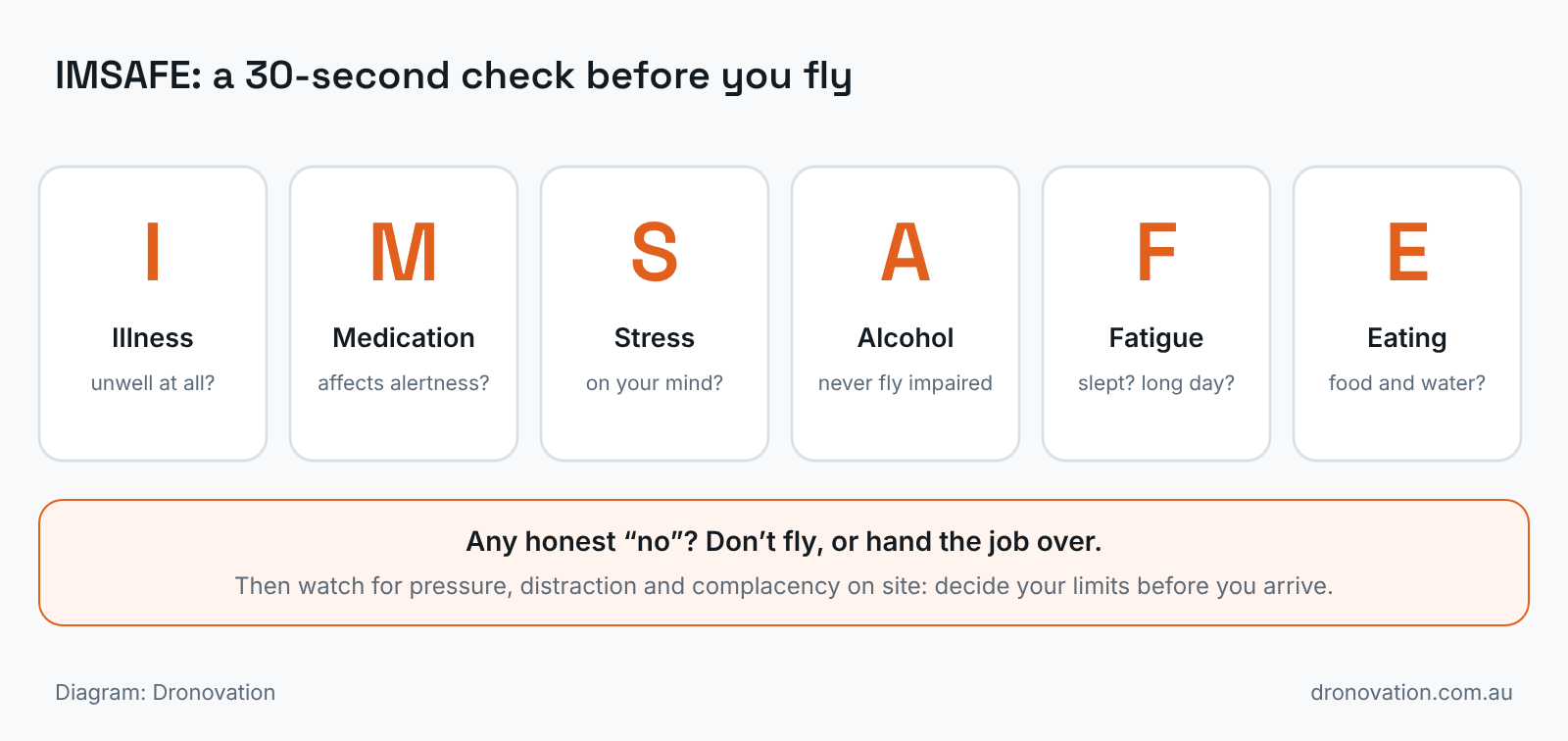
Aviation uses a simple self-check called IMSAFE:
- Illness: am I unwell, even mildly?
- Medication: am I taking anything that affects alertness or judgement?
- Stress: is something on my mind that will distract me?
- Alcohol: have I been drinking? Never fly impaired.
- Fatigue: did I sleep properly, and how long have I been working?
- Eating (and emotion): have I eaten and had water today?
If the honest answer to any of them is a problem, don't fly, or hand the job to someone else.
The dirty dozen
Aviation maintenance has a well-known list of twelve conditions that lead to errors. They apply just as well to drone work:
- Lack of communication
- Complacency
- Lack of knowledge
- Distraction
- Lack of teamwork
- Fatigue
- Lack of resources
- Pressure
- Lack of assertiveness
- Stress
- Lack of awareness
- Norms ("we always do it this way")
Most drone incidents involve more than one. A pilot under time pressure, on a familiar site, skips a check and misses a damaged propeller.
Pressure and "get-there-itis"
The client is watching, the light is perfect and the forecast says wind later. Pressure to complete a job is the most common reason pilots fly when they shouldn't. Decide your limits before you arrive: wind, rain, light, people on site, battery reserve. Write them in the job plan, so stopping is following the plan, not losing face.
Distraction and workload
Flying, watching the screen, talking to a client and answering the phone at once is too much. Ways to reduce it:
- Use an observer on busier jobs, and agree on simple calls
- Keep phones off except for the flight app
- Plan the flight in advance so the job on site is mostly execution
- Stop talking to bystanders while the drone is in the air
Complacency
The hundredth flight at the same site is when checks get skipped. Use the checklist every time, rotate who does what on a team, and treat near misses as warnings, not luck.
Fatigue
Long days, early starts, heat and travel add up. Fatigue slows reactions and makes poor decisions feel reasonable. Plan breaks, limit the number of flying hours in a day, and be careful on the drive home.
Build it into the operation
Good operators don't rely on pilots being perfect. They:
- Write procedures and checklists that catch common errors
- Encourage anyone on the team to call a stop, without blame
- Report and review near misses, not just accidents
- Train pilots in emergencies regularly, so the right response is automatic
General information only. For ReOC holders, human factors training and procedures should be part of the operations manual.