Airspace in Australia is divided into classes, each with its own rules for crewed aircraft. Drone pilots don't fly in most of it, but knowing the classes explains why the drone rules look the way they do.
Controlled and uncontrolled airspace
- Controlled airspace is airspace where air traffic control provides a service. Aircraft need a clearance to enter some classes.
- Uncontrolled airspace (Class G) is where aircraft operate without a clearance, and pilots keep themselves apart by looking out and talking on the radio.
Most drone flights happen low in Class G airspace, away from controlled aerodromes.
The classes you'll see on Australian charts
- Class A: high-level airspace for aircraft flying on instruments. Not relevant to drones.
- Class C: around major airports, and as control area steps above them. All aircraft need a clearance.
- Class D: around many regional and secondary city airports, such as general aviation aerodromes in capital cities.
- Class E: controlled airspace in some parts of the country, mostly at mid levels, where flights on instruments get a service.
- Class G: uncontrolled airspace, covering most of the country close to the ground.
Control zones and control area steps
Around a towered aerodrome:
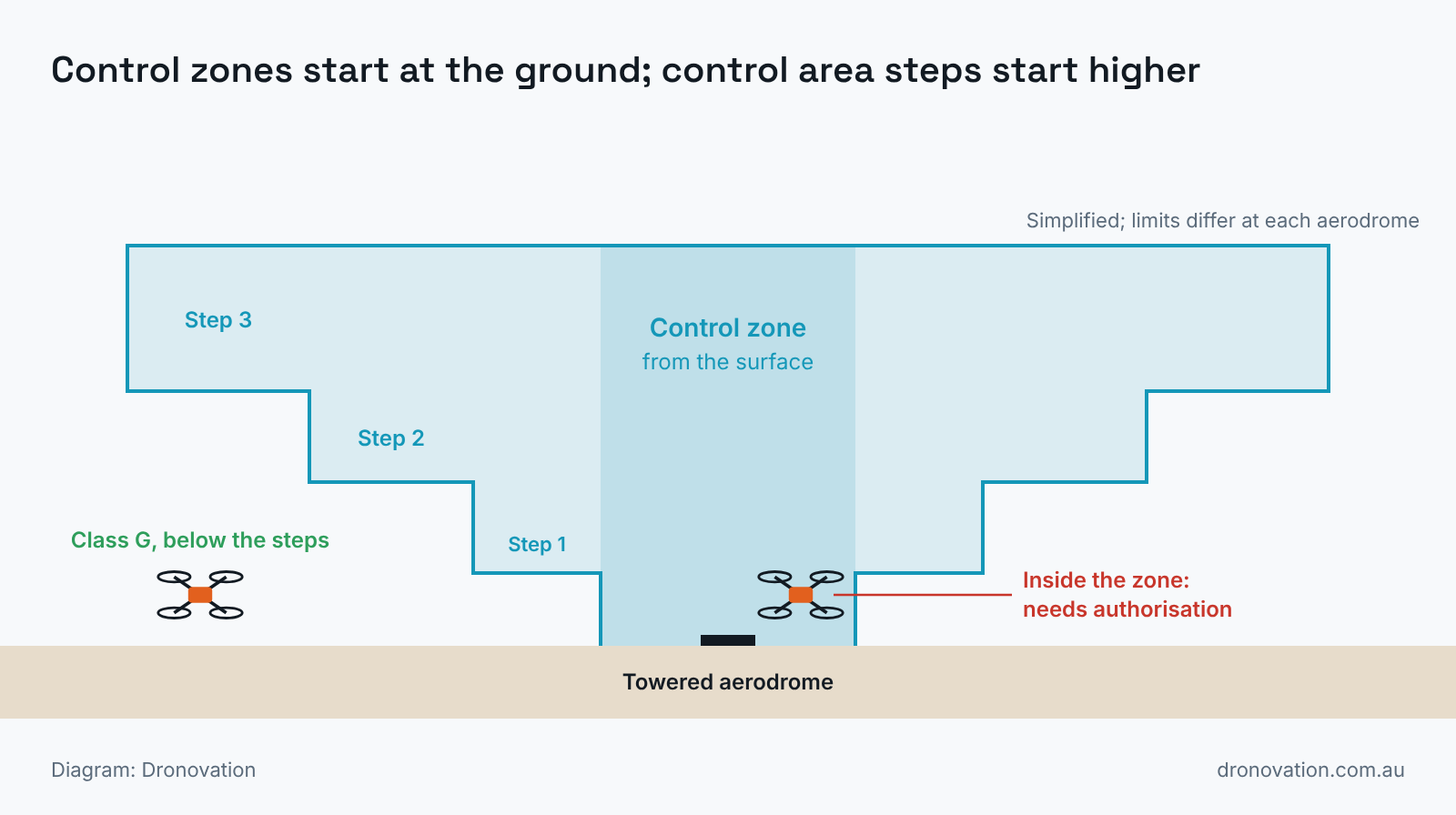
- the control zone (CTR) starts at the surface, so any flight inside it is in controlled airspace
- control area (CTA) steps surround the zone like an upside-down wedding cake, each starting at a higher level further from the airport
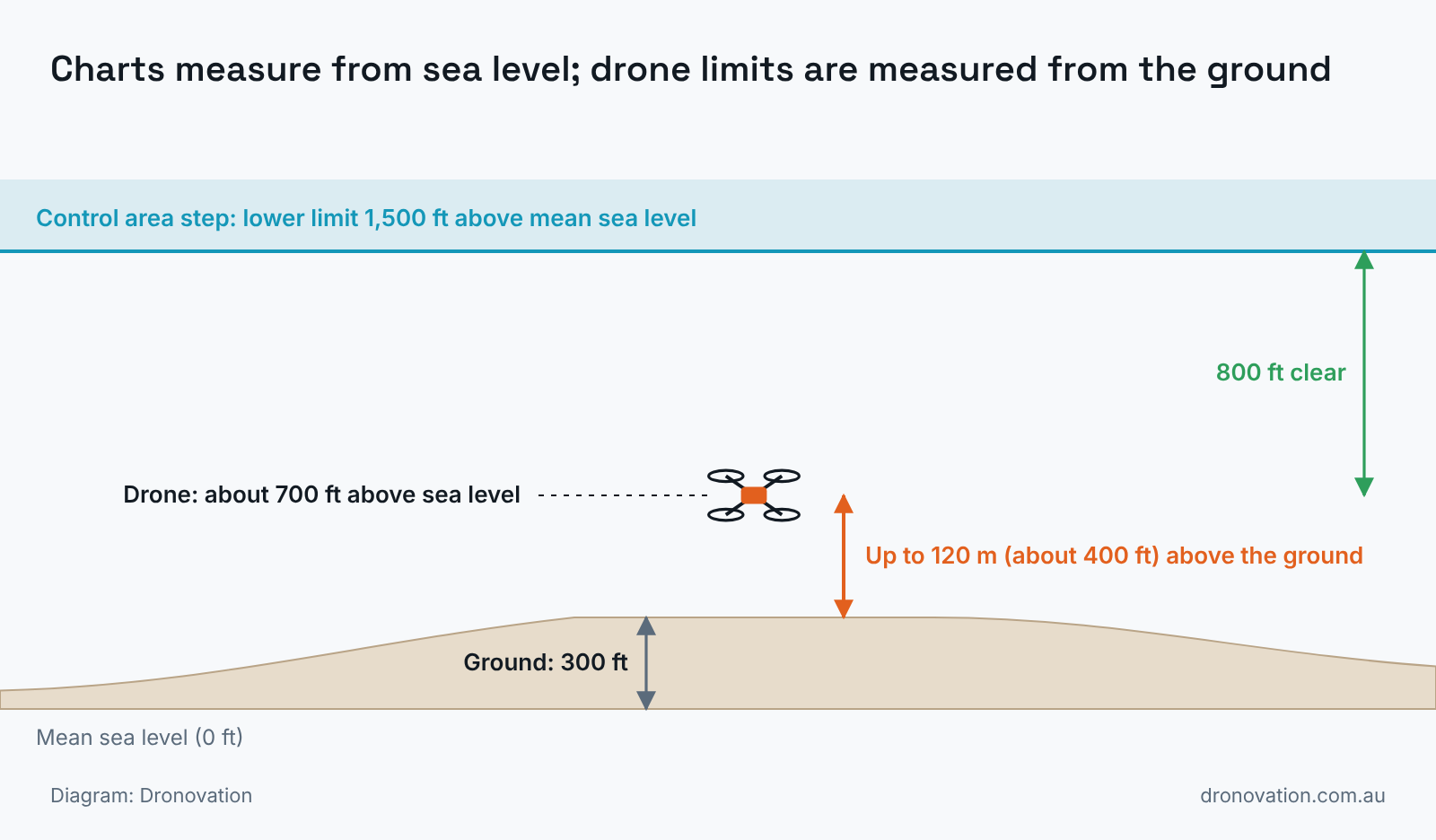
On a chart, each step shows its class and its lower and upper limits, normally in feet above mean sea level. CASA's guide to flying in the Sydney region, for example, describes the Camden control zone as running from ground level to 2,000 ft above mean sea level.
What it means for a drone flight
- Under the standard operating conditions, drones keep away from controlled aerodromes and stay at or below 120 m above ground level. That keeps most flights in Class G.
- Flying in controlled airspace, such as inside a control zone, needs an authorisation. That's normally done by a ReOC holder, often with a radio-qualified pilot.
- A control area step starting well above your maximum height may not affect you, but check the aerodrome and approach rules too.
- Restricted and danger areas can sit in any class. Check whether they're active.
How to check
A CASA-verified drone safety app shows controlled airspace for your location. Charts such as the Visual Terminal Chart show the full structure, so you understand what's above you and who's using it.
General information only. Airspace and rules change. Always check CASA and Airservices for the latest information before you fly.