Weather is the most common reason drone jobs get postponed, and the most common cause of poor data. Planning around it saves time, batteries and reputation.
Wind
- Check the drone's wind limit in the manual, and plan well below it.
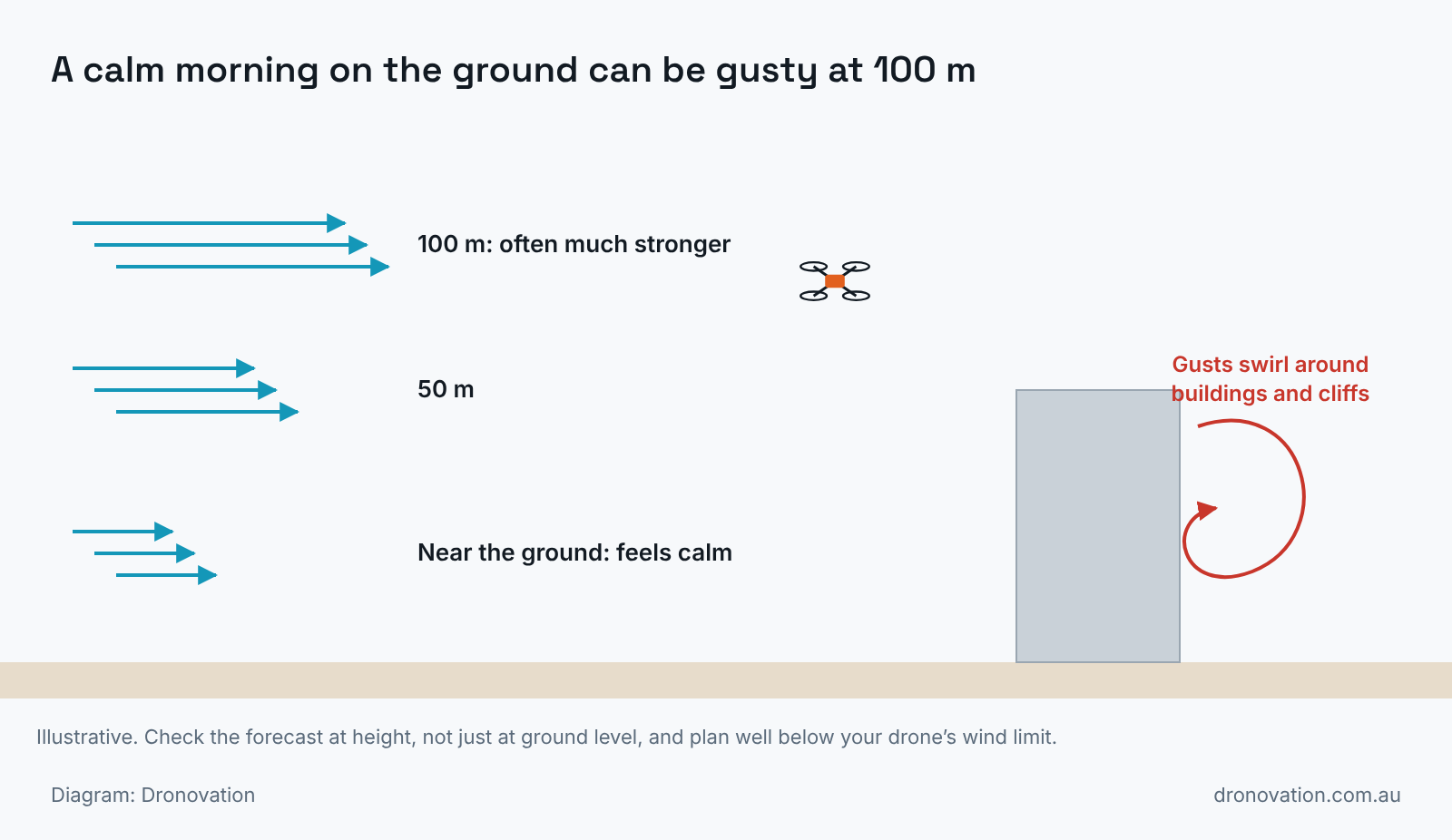
- Wind is stronger higher up. A calm morning at ground level can be gusty at 100 m.
- Gusts matter more than averages. Sudden changes cause the most trouble near structures.
- Flying into the wind uses more battery. Plan to return against the wind with plenty of margin.
- Near buildings, cliffs and coasts, wind swirls unpredictably.
Rain and moisture
Most drones aren't waterproof. Rain, mist and heavy dew can damage electronics and ruin images. Wet surfaces also spoil thermal inspections.
Heat and cold
- Batteries lose capacity in cold weather. Keep them warm until take-off.
- In Australian summer heat, batteries and electronics can overheat. Keep the drone in the shade between flights.
- Heat haze can soften long-distance images.
Light
- Mapping works best with even light: overcast days or the middle of the day reduce harsh shadows.
- Thermal inspections need specific conditions: full sun for solar panels, after sunset for roof moisture.
- Daylight is required under the standard rules.
Visibility and cloud
You must keep the drone in sight. Fog, smoke and low cloud make that impossible. Bushfire smoke can also bring temporary airspace restrictions.
A simple routine
- Check the forecast the day before, including gusts at height.
- Check again on the morning of the job.
- On site, watch trees, flags and dust, and check wind at height with a short test hover.
- Set your own limits below the drone's, and stick to them.
- Record the conditions in your flight log.
Good operators postpone without fuss. A rescheduled job is far better than a crashed drone or useless data.